
Coffee Origin : El Salvador
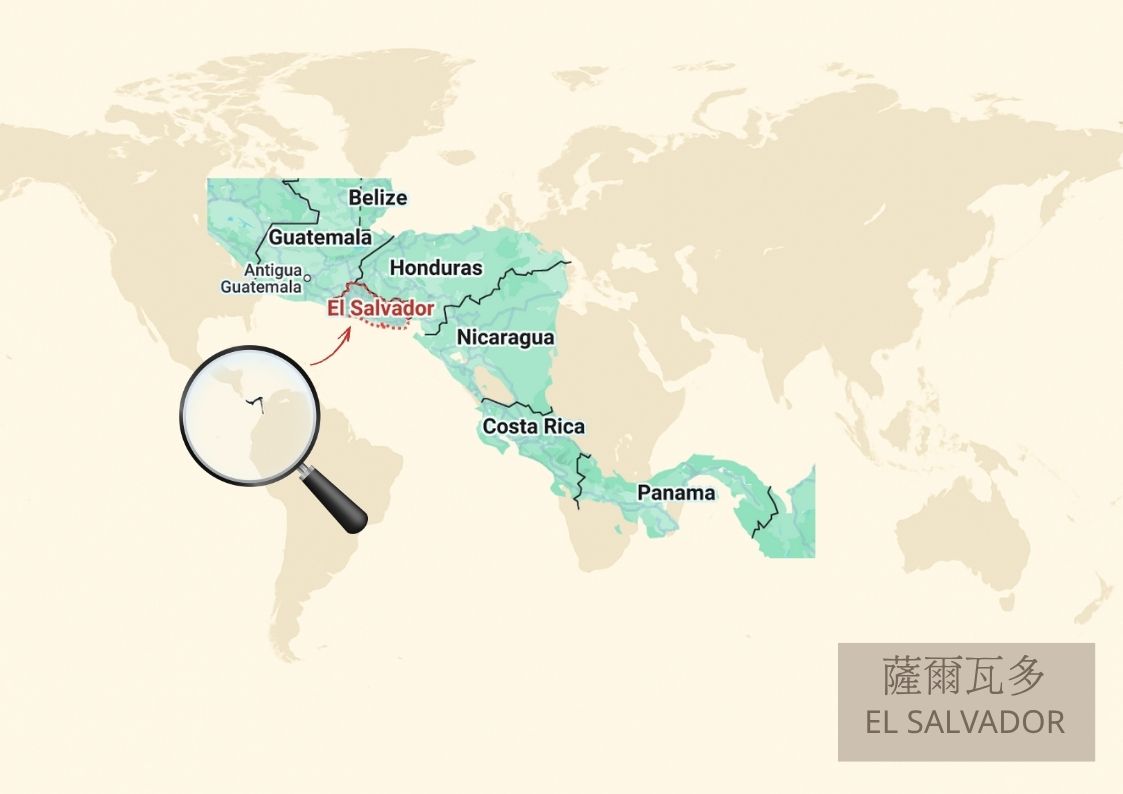
El Salvador is the smallest country in Central America, located on the Pacific coast, yet it has played an outsized role in the global coffee story. From the late 19th to the mid-20th century, coffee became the backbone of the national economy, at one point accounting for around 90% of exports. Coffee shaped land tenure, politics, and social conflict—and today it remains a key vehicle for rural livelihoods and for El Salvador’s reputation in specialty coffee, especially through clean, sweet washed Bourbons and locally developed varieties such as Pacas and Pacamara.
History & Institutions
Coffee cultivation began in El Salvador in the mid-1800s and expanded rapidly towards the end of the century. By the 1920s, it had replaced indigo as the dominant export, creating a powerful “coffee elite” that controlled land, trade, and often the political system itself. This concentration of land and wealth contributed to deep social inequalities and ultimately to decades of unrest and civil war.
n the second half of the 20th century, international price volatility, civil war, and land reform reshaped the sector. Large estates were broken up or declined, farmer incomes became unstable, and many coffee areas experienced abandonment and out-migration. After the peace accords, government agencies and international partners began to promote quality, farmer cooperatives, and protected regional identities. The Consejo Salvadoreño del Café (El Salvador Coffee Council) now coordinates statistics, promotion, and quality policy, while research institutions such as the Salvadoran Coffee Research Institute—responsible for developing Pacamara—play a crucial role in breeding and agronomy.
Terroir & Geography
El Salvador is a land of volcanoes. Coffee is mainly grown on the western and central volcanic ranges at elevations between roughly 1,000 and 2,300 metres. Volcanic soils rich in minerals, combined with steep slopes and Pacific breezes, create cool, stable microclimates. Most coffee is shade-grown under native or fruit trees, which helps conserve biodiversity, reduce erosion, and improve water retention.
The country’s coffee lands are commonly grouped into six to eight major regions or mountain ranges, including Apaneca-Ilamatepec, Bálsamo-Quezaltepec, Tecapa-Chinameca, Cacahuatique, Chalatenango, and Alotepeque-Metapán. These are mostly east-west volcanic chains facing either the Pacific or inland plateaus. Differences in altitude, cloud-belt position, and exposure produce a wide range of flavour profiles—from bright citrus and tropical fruit to deeper cocoa and nut notes.
Varieties & Agronomy
El Salvador built its reputation on Bourbon, particularly Red Bourbon grown on volcanic highlands, known for its soft acidity and caramel-and-cocoa sweetness. In the mid-20th century, farmers identified a natural dwarf mutation within Bourbon populations, which was named Pacas. Later, researchers crossed Pacas with the large-bean Maragogipe to create Pacamara—today one of the country’s most emblematic high-altitude specialty varieties.
Alongside Bourbon, Pacas, and Pacamara, Salvadoran farmers also grow Caturra, Catuaí, Typica, and other Arabica varieties. Most production comes from small, family-owned farms managed by hand over generations. Under pressure from coffee leaf rust and climate change, farmers and breeders have increasingly turned to more disease-tolerant and climate-resilient varieties, while still preserving the traditional Bourbon-based flavour lineage. The result is a dual strategy: classic profiles anchored in Bourbon, complemented by newer, more resilient cultivars.
Processing in El Salvador
Historically, El Salvador has been a washed-coffee origin. Ripe cherries are pulped, fermented, washed, and then patio- or bed-dried, producing clean, balanced cups with clear sweetness and nut-and-cocoa notes. Large centralized mills once dominated processing, but the rise of specialty coffee has encouraged many estates and small mills to process their own coffee to better control quality and flavour differentiation.
Since the early 2000s, honey and natural lots have become increasingly common. Leading farms—especially in regions like Tecapa-Chinameca—experiment with extended drying, staged fermentation, and anaerobic or hybrid methods, often across dozens of varieties. Washed coffees still form the bulk of exports, while honey and naturals are mostly reserved for micro-lots and competition coffees, giving El Salvador a spectrum from classic “clean and sweet” to more fruit-forward and experimental profiles.
Tasting Guide
In broad terms, Salvadoran coffees are often described as “gentle and refined.” Acidity tends to be medium and soft rather than sharp, while sweetness and body are prominent. Typical profiles from washed Bourbon or Pacas lots feature orange zest, red apple, caramel, and milk chocolate, making them excellent daily-drinking filter coffees and versatile espresso bases.
At higher elevations or in Pacamara-based lots, you may find brighter citrus, tropical fruit, florals, and long, syrupy sweetness—ideal for single-origin showcases and limited releases. Honey and natural processing can further push the fruit spectrum towards red berries, dried fruits, maple syrup, and liqueur-like notes, adding complexity to the country’s traditional chocolate-and-nut identity.
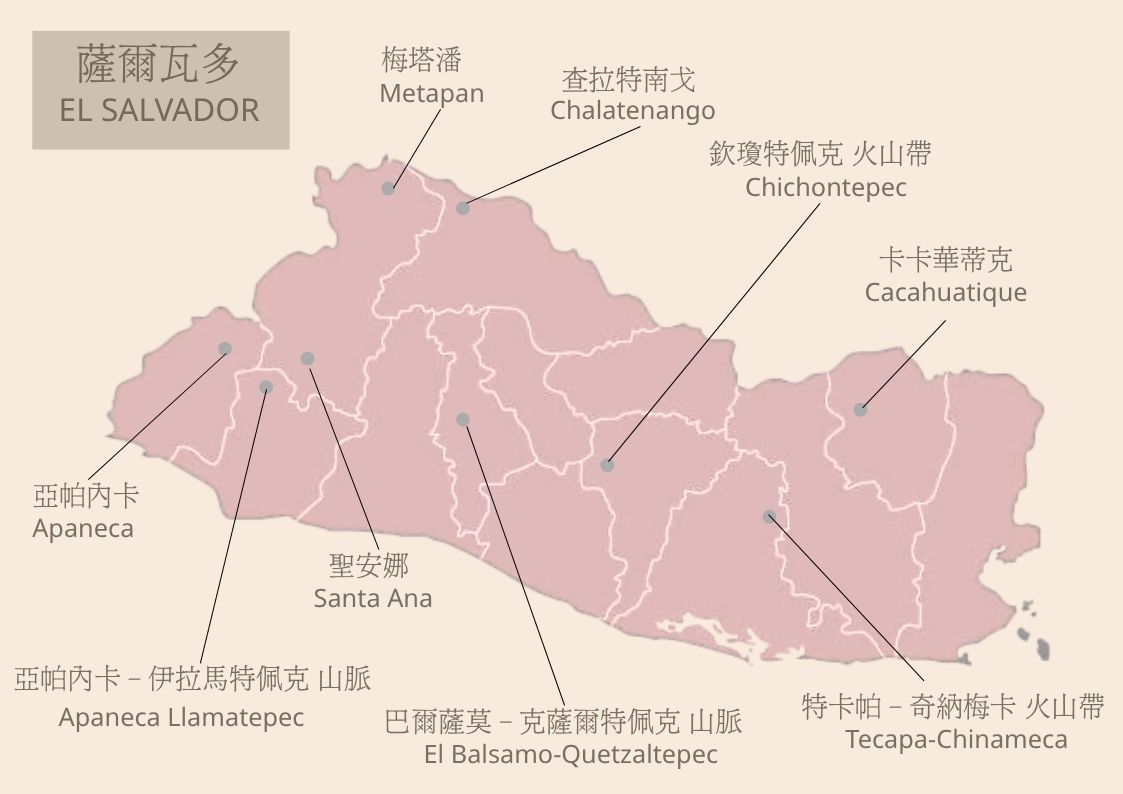
Regional Styles at a Glance
Apaneca-Ilamatepec Range
Region: Western Apaneca-Ilamatepec mountain range (incl. Santa Ana volcano belt)
Altitude: ~1,200–2,000 m (overall range about 500–2,300 m)
Flavour: Full body, bright acidity, layers of florals, citrus, red apple, milk chocolate and caramel sweetness.
Processing: Primarily washed, with extensive use of honey, natural and experimental fermentations.
Stations / Co-ops: Family estates and mills such as La Fany, La Siberia, El Carmen.
El Bálsamo-Quezaltepec Range
Region: Central El Bálsamo-Quezaltepec range around San Salvador volcano
Altitude: 1,000–1,800 m (coffee belt roughly 500–1,900 m)
Flavour: Rich, full body with chocolate, caramel and dried-fruit notes, medium and gentle acidity.
Processing: Mostly washed, with growing use of honey and natural processing to boost sweetness and fruit.
Stations / Co-ops: Farms and wet mills such as El Cipres, San Ernesto.
Tecapa-Chinameca Volcanic Range
Region: Eastern Tecapa-Chinameca range around Usulután & San Miguel
Altitude: ~1,200–1,900 m (overall 500–2,000 m)
Flavour: Medium-to-full body, dark chocolate, caramel and citrus zest with balanced acidity and strong structure.
Processing: Predominantly washed, with pioneering naturals and experimental lots at estates like Los Pirineos, Santa Isabel, La Haciendita.
Stations / Co-ops: Los Pirineos, Santa Isabel, La Haciendita and other high-elevation estate mills.
Chinchontepec (San Vicente Volcano)
Region: Central belt between La Paz and San Vicente, around the San Vicente (Chinchontepec) volcano
Altitude: 1,200–2,000 m, with the volcano rising to 2,130 m
Flavour: Full-bodied, sweet cups with floral, stone-fruit, honey and tropical-fruit notes, medium acidity.
Processing: Primarily washed; co-ops are investing in honey processing and upgraded patios and raised-bed drying.
Stations / Co-ops: Chinchontepec Cooperative and various family-run mills on the volcano’s slopes.
Chalatenango
Region: Mountainous Chalatenango department in the north
Altitude: 1,200–1,800 m, with many SHG lots above 1,400 m
Flavour: Famous for smallholder Pacamara and Pacas micro-lots: jasmine-like florals, stone fruit, tropical fruit and chocolate, with high sweetness and refined acidity.
Processing: Mostly washed; some farmers experiment with naturals, honeys and controlled anaerobic fermentations.
Stations / Co-ops: Networks of smallholder groups and family mills around La Palma and neighbouring communities.
Metapán
Region: Metapán, located in the northern highlands of the Alotepec-Metapán range near the Guatemalan border.
Altitude: Approximately 1,000–1,600 m, with most farms situated on slopes above 1,200 m.
Flavour: Classic Central American profile, typically showing nuts, dark chocolate, caramel and gentle citrus acidity; higher-elevation lots may add light red-fruit or stone-fruit sweetness, with a solid, structured mouthfeel.
Processing: Mainly washed; some small farms and cooperatives have begun experimenting with honey and natural processing for specialty micro-lots.
Stations / Co-ops: Most smallholders deliver cherries to central wet mills and local cooperatives in the area, while a few family estates operate their own mills, supplying regional lots and blend components for export.
Santa Ana
Region: Santa Ana city and the slopes of the Santa Ana volcano, located in the central section of the Apaneca-Ilamatepec range.
Altitude: 1,200–2,000 m
Flavour: High-elevation lots are clean and bright, with citrus, red apple, berries and floral notes, supported by caramel, milk chocolate and toasted walnut-like sweetness and nuttiness; overall very well balanced.
Processing: Traditionally dominated by washed processing; in recent years, many estates around the Santa Ana volcano have also produced honey and natural lots, and some now use anaerobic or extended fermentations to intensify fruitiness and sweetness.
Stations / Co-ops: The area hosts numerous long-established family estates and mills, as well as cooperatives that group smallholders and specialise in processing SHG high-altitude lots from the Santa Ana volcanic belt for use as single-origin specialty and blend components.
Cacahuatique Range
Region: The eastern Cacahuatique mountain range between San Miguel and Morazán, with the Ciudad Barrios area as its core.
Altitude: On average about 500–1,660 m, with higher-quality lots concentrated between roughly 1,000 and 1,600 m.
Flavour: High acidity and aromatic intensity with a medium body and generally lighter mouthfeel; common notes include citrus, red berries, honey-like sweetness, and delicate chocolate and spice tones, with a very clean cup.
Processing: Primarily washed; some cooperatives have introduced water-saving wet processes and improved drying patios and raised beds, gradually increasing the number of distinctive small lots.
Stations / Co-ops: The Ciudad Barrios Coffee Cooperative is the flagship organisation in the region, consistently investing in community development and quality improvement.
Apaneca
Region: Apaneca, within the Apaneca-Ilamatepec volcanic range in western El Salvador
Altitude: 1,200–1,700 m
Flavour: Medium to lively acidity with notes of citrus, red apple and florals, supported by caramel and milk-chocolate sweetness and a smooth, refined mouthfeel.
Processing: Predominantly washed coffees, with some estates producing limited honey and natural lots to highlight fruitiness and sweetness.
Stations / Co-ops: Mostly family-run estates with their own wet mills, alongside small local cooperatives focusing on carefully selected specialty micro-lots.
Harvest & Seasonality
Harvest in El Salvador typically runs from October through March, depending on region and altitude. Lower elevations are picked first, while highland farms often harvest ripe cherries from December into March. Picking is manual and selective, with multiple passes to ensure optimal ripeness before cherries are transported quickly to mills for processing.
In terms of shipping and arrival, washed coffees usually begin leaving the country from January through June; honey and natural lots, which require longer drying times, may ship slightly later. In recent years, labour shortages, irregular rainfall, and delayed ripening have increased variability in both yield and calendar, so roasters often rely on annual reports and climate updates when planning purchases.
Grading & Quality Control
El Salvador uses altitude-based export grades, most notably SHG (Strictly High Grown, 1,200+ masl), HG (High Grown, 900–1,200 masl), and Central Standard (500–900 masl). SHG is the most sought-after grade in the specialty market, associated with higher density and greater flavour potential.
Quality control is carried out at multiple levels. Exporters and estates operate cupping labs and batch-tracking systems, while national and private platforms—such as Cup of Excellence and various auctions—encourage producers to present farm-specific and process-specific lots. These programmes apply international cupping standards and transparent scoring, supporting higher prices for exceptional coffees and reinforcing the distinct identities of each region, often under Denomination of Origin schemes.
Sustainability & Community
Coffee has long provided rural employment and foreign exchange for El Salvador, but it has also been linked to land concentration, social inequality, and conflict. Civil war, economic crises, and the coffee leaf rust outbreaks of the early 2010s caused major declines in planted area and yields, pushing many rural families to migrate or depend on remittances.
At the same time, El Salvador is recognised as one of Central America’s most quality-focused and innovative origins. An estimated 90–95% of coffee is shade-grown, and many farmers and estates pursue organic, Rainforest Alliance, Fairtrade, or direct-trade models. A new generation—including many women and young producers—is investing in processing innovation, variety trials, and coffee tourism, linking coffee to local culture, environmental stewardship, and community development.
Future Challenges
The Salvadoran coffee sector faces a cluster of structural challenges: climate change and rising temperatures, the upward migration of suitable altitude bands, persistent coffee leaf rust and other pests, labour shortages driven by rural-urban and international migration, and chronically low commodity prices that make it difficult for farmers to invest in renovation and good agronomy. Official projections show output still far below historical highs, and the absence of a long-term national strategy remains a concern.
Key responses include breeding and disseminating rust-resistant and climate-resilient varieties, improving soil and water management, strengthening farmer organisations and cooperatives, expanding coffee tourism and value-added products, and using competitions and auctions to secure higher prices for top lots. Whether El Salvador can maintain and grow its place in the specialty coffee world under climate stress will depend on how effectively these innovations and policies translate into stable, dignified incomes for the farmers who keep planting on its volcanic slopes.