
Ethiopia
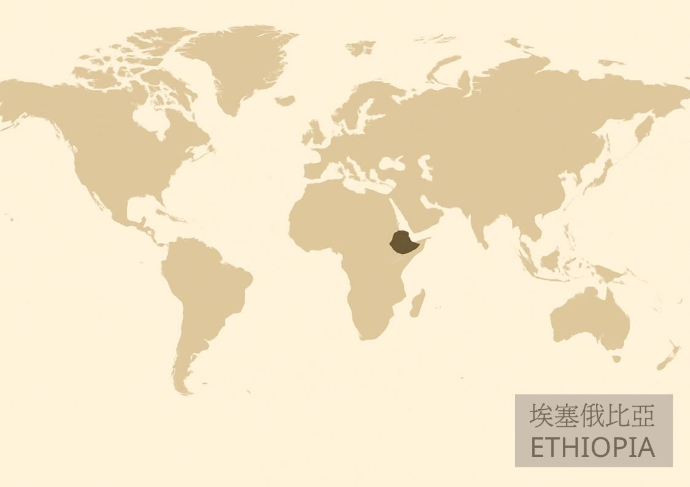
Overview
Ethiopia is widely regarded as the birthplace of Arabica, boasting exceptional landrace diversity that yields hallmark profiles of florals, bright acidity, and tea-like clarity. From smallholders to washing stations, the supply chain is community-centred, so each lot expresses a distinct identity. For flavour seekers, regions like Yirgacheffe, Guji, and Sidama form a “map” ranging from clean, tea-like cups to exuberant berry notes. For ethically minded buyers, cooperative structures and transparency are equally compelling. Ethiopia balances deep tradition with constant innovation.
History & Culture
Beyond the Kaldi legend, Ethiopia’s essence is captured by its millennia-old consumption culture and the Bunna coffee ceremony: pan-roasting, hand-grinding, and three-round serving that bind families and communities. In modern times, cooperative models and washing stations established quality norms; the Ethiopia Commodity Exchange (ECX) once centralised trade, later loosening for better traceability, enabling estate narratives and micro-lots to reach specialty markets. This cultural bedrock intertwined with smallholder economics preserves tradition while fostering innovation.
Terroir & Geography
High elevations (≈1,700–2,300+ m), diverse microclimates, and volcanic soils shape bright acidity and floral aromatics. Monsoonal rains and wide diurnal ranges promote sugar accumulation and even ripening, revealing lemon zest, bergamot, and white-flower nuances. Premium regions cluster in the southern and south-western highlands; farming is decentralised among smallholders, while processing is centralised at stations. From country to regional scale, altitude, rainfall, soils, and processing subdivide styles from tea-like delicacy to tropical fruit expression.
Varieties & Diversity
Ethiopian landraces—often lumped historically as “heirloom”—in fact comprise numerous locally named types such as Kurume, Wolisho, and Dega. This broad genetic pool spans florals, citrus, stone fruit, and berries. Since the 1970s, the Jimma Agricultural Research Center (JARC) has released selections like 74110, 74112, and 74158, balancing disease resistance, yield, and cup quality. Labels frequently list landraces alongside JARC selections. For roasters, diversity raises lot variability but unlocks vast potential for discovery and blending.
Processing in Ethiopia
Washed processing—pulping, fermentation, and washing—delivers cleanliness, tea-like texture, and sparkling acidity. Natural processing on raised beds emphasises ripe fruit, dried berries, and a gentle winey tone. Honey processing remains less common but is growing, mediating sweetness and cleanliness. Innovative methods—anaerobic, carbonic maceration, barrel-aged—appear in limited micro-lots, adding tropical and ferment-driven complexity. Outcomes hinge on cherry selection, floatation, drying management, and water stewardship, which directly influence consistency and cup performance.
Washing Stations / Cooperatives
Smallholders typically deliver ripe cherries to washing stations or cooperatives. Stations handle selection, pulping, fermentation, washing, grading channels, and raised-bed drying, enforcing moisture and water-activity thresholds. Cooperatives aggregate cherry, provide pre-financing, agronomy training, and bargaining power, and often label lots as “station name + region” to strengthen traceability. Leading stations apply tighter ripeness sorting and segmented drying for intra-grade uniformity while reducing water use and treating wastewater to protect local ecosystems.
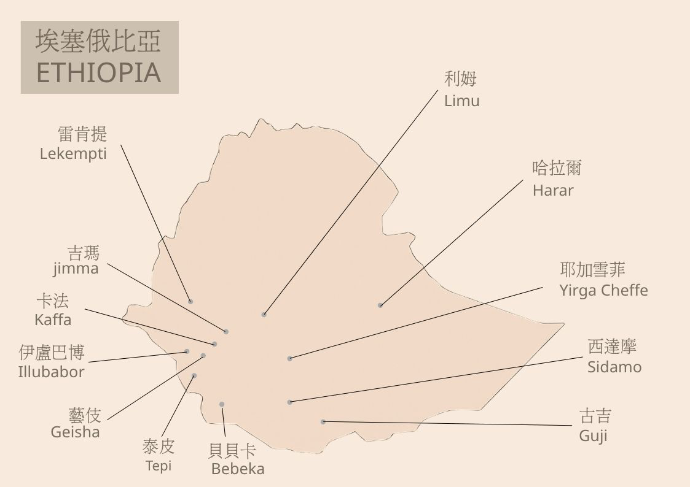
Regional Styles at a Glance
Stations/Co-ops: proximity to research centres; quality on the rise
Harvest & Availability
The main harvest runs roughly October–February, varying with altitude and rainfall. After drying, conditioning, and export logistics, arrivals typically reach key markets from late spring through summer. Fresh-crop coffees often stabilise after adequate resting; watch the crop year, landing dates, and freshness to capture the ideal flavour window.
Grades & Buying Guide
Ethiopian grading focuses on defect counts and cleanliness: Grades 1–2 dominate specialty, offering clarity and focus; Grade 3+ is usually commercial. Buying cues: region, washing station, processing, altitude, landraces/JARC selections, and lot names. For jasmine/tea-like clarity, choose Yirgacheffe Washed; for exuberant fruit, try Guji or Sidama Naturals; for characterful talking points, explore anaerobic/CM micro-lots. Always check roast style and roast date.
Sustainability & Ethics
A smallholder-led chain must balance quality premiums with income stability. Cooperatives enable collective bargaining, pre-financing, and agronomic support, buffering price volatility; direct trade and responsible sourcing reinforce traceability and long-term relationships. Environmental priorities include water conservation, wastewater treatment, shade trees, and soil conservation. HKERSHOP prioritises transparency, long-term partnerships, and local value-add to support stations and teams that tangibly improve community wellbeing.
Future Challenges
Climate change is shifting pest pressure, yields, altitudinal bands, and ripening calendars. Rural youth out-migration challenges succession among farmers; logistics and FX add uncertainty. On the market side, experimental processing must balance novelty with consistency; in governance, traceability and quality oversight continue to evolve. Scaling agronomy training, climate adaptation, and relationship-based contracting will be crucial to sustaining Ethiopia’s specialty edge.