
Coffee Origin : Panama
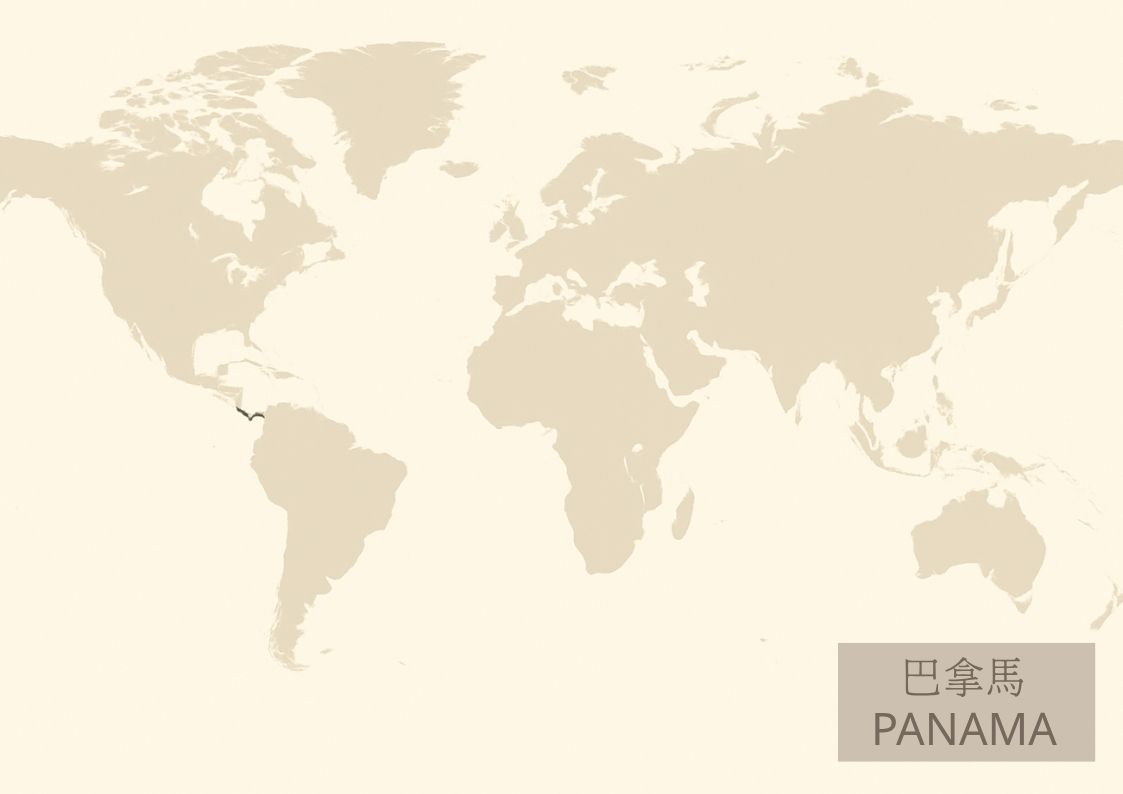
Panama, located on the Central American isthmus between the Pacific Ocean and the Caribbean Sea, is renowned for its exceptional terroir and meticulous estate-based coffee production. Since the rise of the Geisha (Gesha) variety, which has achieved record-breaking auction prices, Panama has become a global symbol of excellence in specialty coffee. Its volcanic terrain, complex microclimates, and disciplined estate system together produce coffees celebrated for floral aromas, bright fruit acidity, and a refined, transparent sweetness.
History & Institutions
Coffee arrived in western Panama in the early 20th century, taking root mainly in the Chiriquí province—particularly around Boquete and Volcán. During the 1990s, as the specialty movement spread worldwide, small private estates adopted precision-driven farming and processing methods. In 1996, producers founded the Specialty Coffee Association of Panama (SCAP), followed by the launch of the Best of Panama (BOP) competition in 1997. Through blind cupping and transparent auctions, these institutions helped establish Panama’s reputation for traceable micro-lots and estate branding. The “Panama Geisha” soon became both a legend and a benchmark in the global coffee industry.
Terroir & Geography
Most Panamanian coffee is grown in the western province of Chiriquí, surrounding the volcanic slopes of Volcán Barú. Elevations range from 1,200 to 2,100 m, with fertile young volcanic soils rich in minerals and excellent drainage. Influenced by both Pacific and Caribbean winds, the region’s cloud-forest microclimate features large diurnal temperature shifts that slow cherry maturation and enhance sugar development. Many estates practice shade-grown cultivation, which stabilizes temperature, protects soil, and preserves biodiversity. These natural conditions create the clarity, balance, and aromatic complexity that define Panamanian coffee.
Varieties & Agronomy
Panama’s varietal diversity includes Geisha, Caturra, Catuai, Typica, Bourbon, and Pacamara. Among them, Geisha is the most iconic—known for jasmine-like florals, citrus brightness, tropical fruit tones, and an elegant tea-like texture. The variety is highly sensitive to its environment, thriving only under high altitude and careful agronomic control. Estates commonly apply selective hand-picking, plot separation, integrated pest management (IPM), and detailed soil nutrition monitoring to maintain consistency and exceptional cup quality.
Processing in Panama
Processing in Panama blends tradition with innovation. Washed coffees are clean and transparent, emphasizing floral and citrus notes and representing the classic style. Honey-processed lots deliver higher sweetness and a rounder body by retaining part of the mucilage layer. Natural coffees highlight tropical fruit, berry, and wine-like tones while maintaining clarity when executed with precision. In recent years, producers have adopted anaerobic, carbonic maceration, thermal shock, and yeast-inoculated fermentations for competition or experimental lots—adding new layers of fruit intensity and structure.
Tasting Guide
Panamanian coffees typically open with aromas of white flowers and jasmine, followed by bergamot, lime, peach, and tropical fruits such as passion fruit, pineapple, and honey sweetness. The cup is clean, bright, and sweet, with delicate acidity and a tea-like finish. For brewing, use a medium-fine grind and a 1:15–1:16 brew ratio, pouring in stages. Washed coffees shine with faster extractions to preserve clarity, while naturals and fermented lots benefit from a slightly longer middle pour to emphasize sweetness and aroma depth.
Regional Styles at a Glance
Processing Stations / Cooperatives: Primarily estate-run mills with strict lot separation
Note: Regional names in Panama usually refer to local districts within Chiriquí Province. In practice, coffees are often identified by estate name + plot name, ensuring full traceability.
Harvest & Seasonality
Flowering occurs between March and May, and the main harvest runs from December to March, slightly later at higher elevations. Exports peak between March and June. Coffees show their best sweetness and clarity within three to nine months after arrival, though top lots retain aromatic vitality longer under proper storage. This clear harvest rhythm allows roasters to plan seasonal rotations throughout the year.
Grading & Quality Control
Panama follows Central American grading standards such as SHB/SHG (Strictly Hard Bean / High-Grown) and EP (European Preparation, indicating uniform screen size and minimal defects). Competition lots are classified by cupping score and flavor profile rather than size. The QC process includes selective picking by plot, flotation sorting, controlled fermentation, a mix of raised-bed and mechanical drying, multiple screen and density separations, and final cupping approval. Each lot carries full traceability and is typically categorized as Estate Lot, Micro-lot, or Experimental Lot.
Sustainability & Community
Panama’s coffee industry emphasizes environmental and social sustainability. Estates practice shade-grown agroforestry, soil conservation, and water recycling to reduce usage during processing. Socially, producers work with Ngäbe-Buglé Indigenous communities and seasonal migrant workers, providing housing, education, and healthcare. Although the high-price specialty market brings prosperity, it also demands transparency and fair labor practices to ensure long-term balance and equity across the supply chain.
Future Challenges
Climate change remains Panama’s greatest concern: rising temperatures and unpredictable rainfall disrupt flowering and ripening, requiring adaptive agronomy and resilient varieties. Leaf rust and borer pests continue to challenge farmers, while labor shortages and high costs increase production pressure. Sustaining quality, stability, and fairness—while maintaining economic viability in a volatile high-end market—will define the next chapter of Panama’s coffee story.