
Ethiopia - Region : Yirgacheffe
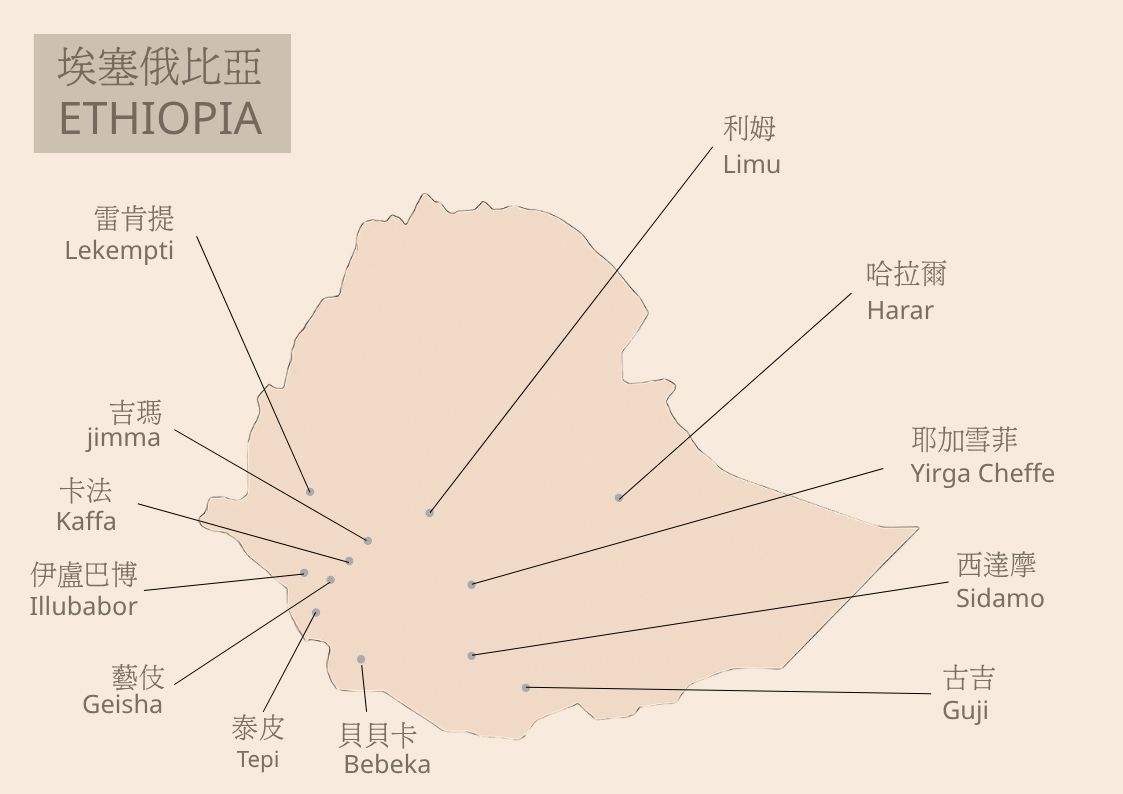
Yirgacheffe is one of the most iconic specialty-coffee origins in Ethiopia’s southern highlands, known for its instantly recognizable profile. It is often described through a classic trio—floral aromatics, citrus brightness, and a tea-like finish—with a clean fragrance, lively yet refined acidity, a light and silky mouthfeel, and a crisp, sweet aftertaste. For drinkers moving from “easy to drink” toward “more layered,” Yirgacheffe is often the origin that stays in memory after the very first cup.
History
Yirgacheffe’s reputation is rooted in Ethiopia’s long-standing smallholder traditions and highland coffee culture. Production is largely small-farm based, with cherries delivered to washing stations or cooperatives for processing, grading, and lot management. As a result, “Yirgacheffe” on a label may refer not only to a regional style, but also to a specific washing station, village, or identifiable lot. This smallholder-and-micro-lot structure is exactly why Yirgacheffe can feel both classic and endlessly variable—the same name, yet different details each season.
Terroir
Located in the southern highlands, Yirgacheffe commonly features high elevations, significant day–night temperature swings, and a slower ripening cycle. These conditions help coffee cherries develop fine aromatics and a well-defined sweet-acid structure. The landscape is often hilly and forest-influenced; shade and diverse vegetation support a stable microclimate and soils, contributing to the region’s hallmark cup character: clean, bright, and elegant. Yirgacheffe wins not through heaviness, but through clarity and precision.
Varieties
Yirgacheffe is most often associated with Heirloom varieties—an umbrella term for diverse, locally adapted genetic lines rather than a single, uniform cultivar. This genetic richness explains why Yirgacheffe can express multiple “faces” even within the same origin name: some cups lean toward white-floral tea notes, others toward citrus peel, honeyed sweetness, or a gentle nutty sweetness. This is what makes it both a timeless classic and a coffee you rarely get tired of.
Processing
Processing style strongly shapes how Yirgacheffe presents in the cup. Washed lots typically emphasize floral and tea-like clarity, with crisp structure and pronounced citrus and white-flower aromatics. Natural lots often push fruit sweetness and ripe-fruit intensity, with notes that may lean toward berries, tropical fruit, or honey-like richness and a fuller mouthfeel. In recent years, experimental methods (e.g., anaerobic, yeast-fermented, or floral-scented specialty lots) have also appeared, but outstanding Yirgacheffe tends to keep one core principle: clean aromatics, clear sweetness, and a tidy finish.
Tasting Profile
A classic Yirgacheffe often shows white flowers, jasmine, bergamot, lemon zest, and a white-tea-like impression. On the palate, acidity is bright but not sharp; sweetness is delicate; the body is light, smooth, and refined; and the finish is clean and crisp. Washed lots feel like elegant floral tea, while naturals feel like expressive fruit sweetness—two distinct languages, both unmistakably specialty.
Grading & Label Reading
On labels, you may see the origin name, processing method, elevation, washing station/cooperative, lot identifiers, and sometimes a grade (e.g., “Grade”). For shoppers, the most practical approach is to focus on three essentials: (1) source information (Yirgacheffe plus station/village when available), (2) processing style (Washed or Natural), and (3) lot traceability/clarity (how specific and consistent the lot details are). Generally, clearer labeling suggests stronger lot separation and quality control—making it easier for the cup profile to align with your expectations.
Harvest & Seasonality
Yirgacheffe is seasonal by nature. Differences in rainfall patterns and cherry maturation from year to year can create subtle shifts between lots—aroma intensity, sweet-acid balance, and fruit expression may vary slightly even under the same origin name. These variations are not flaws; they reflect the living character of origin coffee. For a website, this can be framed positively as a seasonal origin worth revisiting, while also highlighting your attention to fresh lots and consistent selection standards.