
Honduras - Region : Opalaca
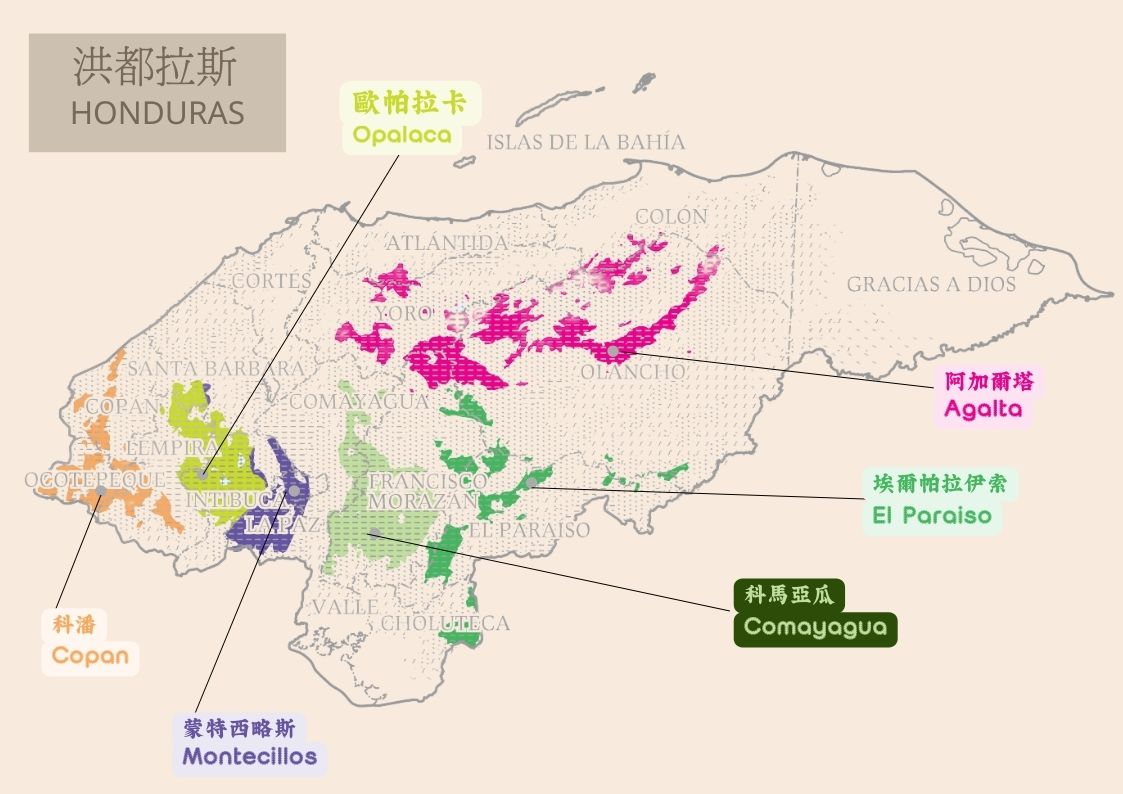
OPALACA is one of Honduras’ highland coffee regions that has gained increasing attention in the specialty market in recent years. It is often described as a “clean, consistently sweet, well-balanced” profile: the acidity is clear yet not overly sharp, and the overall cup feels smooth and comfortable—an ideal origin style for everyday drinking while still offering distinct character.。
From a terroir perspective, OPALACA is known for its mountainous terrain and diverse microclimates. Elevations are generally high, and the day-night temperature swing slows cherry maturation, allowing sugars to develop more fully. This is one of the key reasons the region can deliver clarity and layered structure in the cup. A relatively stable climate also supports reliable harvesting conditions, making it easier to produce coffees with refreshing fruit acidity, nutty sweetness, and gentle floral notes.。
Production in OPALACA is largely smallholder-driven, with family farms and community networks playing important roles. Many growers use shade-grown systems and mixed farming, where coffee is cultivated alongside fruit trees or timber species. This helps maintain soil health and reduces heat and drought stress. Because farms are often scattered across complex terrain, selective hand-picking and harvesting in multiple passes is common—an approach that can significantly improve ripeness consistency and overall cup cleanliness.。
In terms of varieties, OPALACA commonly grows Central American staples such as Bourbon, Catuai, Caturra, and Pacas. When suitable varieties are matched with higher elevations and good farm management, the result is often stronger sweetness and more expressive aromatics. At the same time, differences in farming practices, tree age, and picking strategy can create noticeable variation—from caramel-and-nut driven cups to brighter citrus, floral notes, and even subtle red-fruit accents.。
Washed processing remains the most widespread method, emphasizing clarity, brightness, and definition. At the same time, naturals and honeys are increasingly seen, alongside more careful fermentation control and drying management that can add complexity. For OPALACA, the mill and drying stages are often decisive in achieving “cleanliness”: stable fermentation, even drying, and proper storage all directly influence how transparent the cup tastes and how crisp and pleasant the sweetness feels.。
In the cup, OPALACA typically leans toward a “sweetness-forward” style. Common base notes include caramel, honey, nuts, cocoa, and soft chocolate, sometimes accompanied by citrus, green apple, or delicate florals. The mouthfeel is often rounded and clean, with an easy, satisfying finish. For brewing, pour-over methods can highlight the bright sweet-acid balance and aromatics, while slightly higher extraction or a more concentrated approach can emphasize body, sweetness, and nutty-cocoa depth.。
In terms of harvest seasonality, the main harvest in OPALACA generally runs from late in the year into the following spring, though timing varies by elevation and microclimate. For retail and website content, it helps to connect this to “arrival timing” and “best drinking window,” since newly landed lots often show a period of livelier aromatics and brighter clarity.。
Overall, OPALACA’s strength lies in the combination of high-altitude terroir, clean sweetness, and the ongoing refinement driven by smallholder traditions and specialty-focused improvements. While the region faces challenges such as climate change, disease pressure, and price volatility, it also has strong opportunities to build recognition through micro-lots, processing innovation, and clearer regional identity. If you are featuring a representative estate or cooperative from OPALACA (for example, Masaguara), adding a short case section can tie terroir, processing, and flavor together—making it easier for readers to understand why that coffee tastes the way it does.。