
Coffee Origin : Honduras 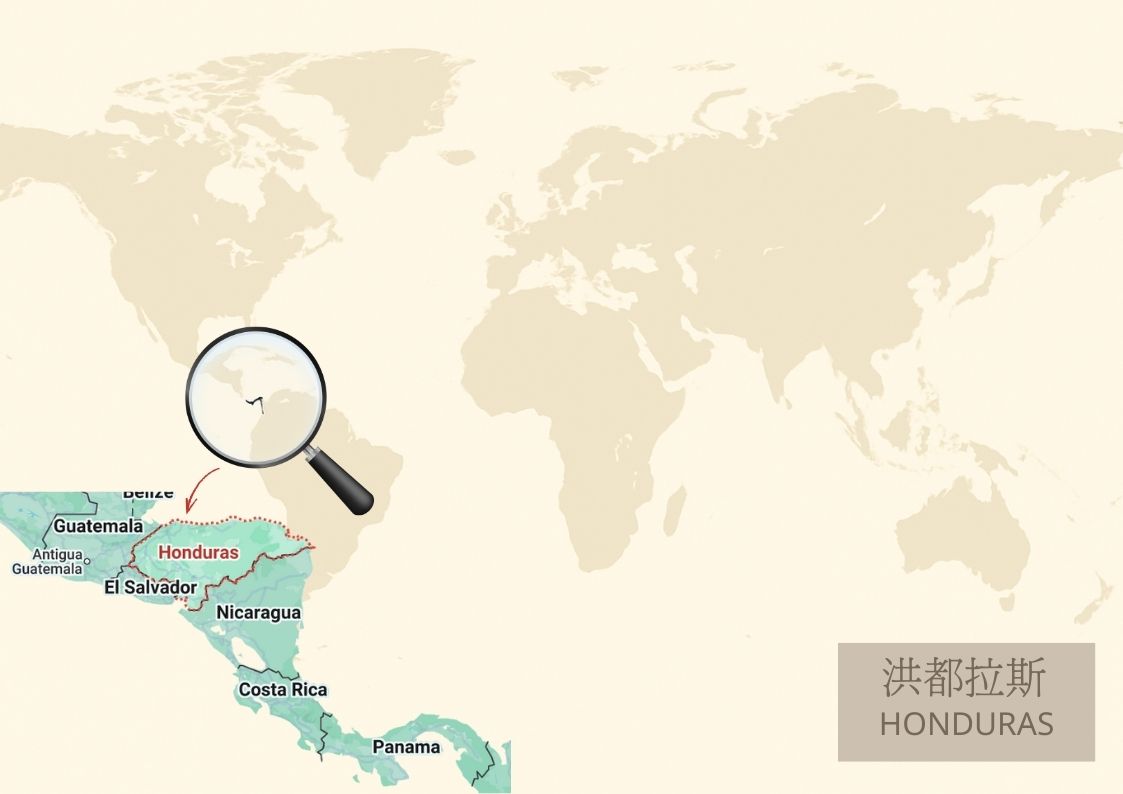
Honduras has, over the past two decades, shifted from being viewed mainly as a “high-volume export origin” to an origin with memorable flavors and clearer regional identity. It is not only one of the largest coffee exporters in Central America, but also a major global source of Arabica. In recent years, improved consistency, more microlots, and stronger regional storytelling have helped the market re-discover Honduras beyond “clean, sweet, good value” — revealing much more depth and nuance.
History & Institutions
Honduran coffee can be traced back to the early 19th century. The country’s modern structure and quality trajectory, however, are closely tied to IHCAFE (Instituto Hondureño del Café), the national coffee institute, which has played a central role in technical support, research, training, quality frameworks, and origin promotion. Honduras later joined the Cup of Excellence (COE) system, and the competition pathway helped top lots reach international specialty buyers. Around the same period, the “six coffee regions” framework became a widely used reference point for branding, classification, and communicating style differences to the market.
Terroir & Geography
Honduran coffee is grown predominantly in mountainous and highland areas, commonly around 1,000–1,600 meters above sea level. Higher elevations, noticeable day-night temperature swings, and valley microclimates slow cherry maturation and increase bean density — forming a strong foundation for sweetness, clarity, and structure. Coffee is produced across a broad swath of the country (many departments grow coffee), but in export and branding contexts, Honduras is most often presented through six core regions: Copán, Montecillos, Opalaca, Comayagua, El Paraíso, and Agalta.
Varieties & Agronomy
Traditionally, Honduras has been anchored by classic Arabica varieties such as Bourbon, Catuaí, Caturra, and Typica, often delivering familiar sweetness and chocolate-nut foundations. In recent years, leaf rust pressure and the need for yield stability have increased the adoption of rust-tolerant and improved varieties (for example, Parainema). The ongoing challenge is to balance resilience and productivity with cup quality as farms renovate and replant.
Processing in Honduras
Washed processing remains the mainstream in Honduras: cherries are harvested, depulped, fermented, washed, then dried either on patios/raised beds or with mechanical dryers. Because weather patterns and rainfall can make drying difficult in some areas, mechanical drying is sometimes used more heavily — and drying speed plus stable moisture levels can strongly affect cup cleanliness and shelf stability. On the specialty side, honey, natural, anaerobic, and other experimental processes are increasingly common, but “clean, sweet, balanced” remains Honduras’ most recognizable baseline.
Tasting Guide
Think of Honduras as a sweetness-driven origin: cups tend to be clean, rounded, and balanced, with gentle acidity that can still feel precise and defined. Common notes include caramel, milk chocolate, nuts, and brown sugar. At higher elevations — or where processing is more meticulous — you may see clearer citrus, stone fruit, red fruit, floral hints, and occasionally a tea-like finish. If you’re looking for a Central American coffee that is approachable but not boring — sweet, structured, and layered — Honduras is often a very dependable choice.
Regional Styles at a Glance
Processing: mainly washed
Processing: mainly washed
Harvest & Seasonality
In general, Honduras’ main harvest often runs from around November through April. New-crop arrivals in importing markets commonly appear around May–July, depending on logistics and lot flow. In recent years, climate instability has sometimes delayed flowering and shifted peak harvest timing, creating bottlenecks at mills and increasing the risk of quality inconsistency.
Grading & QC
Honduras is often described using grades such as SHG (Strictly High Grown) and HG (High Grade), with screen size and defect sorting used as additional indicators in some channels. Quality frameworks and technical support have long been shaped by national institutions and regional infrastructure — spanning agronomy guidance, training, and monitoring systems that help farmers manage risk factors (including pests, disease, and weather stress).
Sustainability & Community
Coffee is a vital economic pillar in Honduras and is largely produced by smallholders, meaning “sustainability” is not only an environmental topic but also a livelihoods topic for rural communities and seasonal labor. A growing focus is supply-chain traceability and compliance requirements (for example, deforestation-related regulations). Even where shaded cultivation is common, producers and exporters increasingly need clearer plot documentation and stronger data systems — which makes technical assistance and cooperative support more important than ever.
Future Challenges
Honduras’ next step forward hinges on three major fronts. First, climate volatility — unstable flowering, compressed harvest peaks, and tougher drying conditions — tests processing capacity and quality control. Second, the long fight against diseases such as leaf rust requires continuous renovation and smart variety choices, while avoiding a “resilience at the expense of cup quality” trap. Third, international compliance and traceability demands raise the burden on smallholders, increasing the need for coordinated support and better documentation tools. With continued institutional support, improved post-harvest infrastructure, and stronger micro-regional branding, Honduras remains one of the clearest examples of an origin where volume and specialty progress can move forward together.
在這裡開始寫入